
Older homes can have real character, but they can also lose heat in ways that are not obvious until the heating is working hard and rooms still feel cool. Walls, roof spaces, floors, windows, doors and small gaps all play a part, but uninsulated external walls are often one of the biggest areas to look at.
Cavity wall insulation helps reduce heat loss by filling the empty space between the inner and outer leaves of suitable external walls. This guide explains how heat escapes, how a property is assessed, what happens during installation and what homeowners usually notice once the work is complete.
Why older homes lose heat through walls
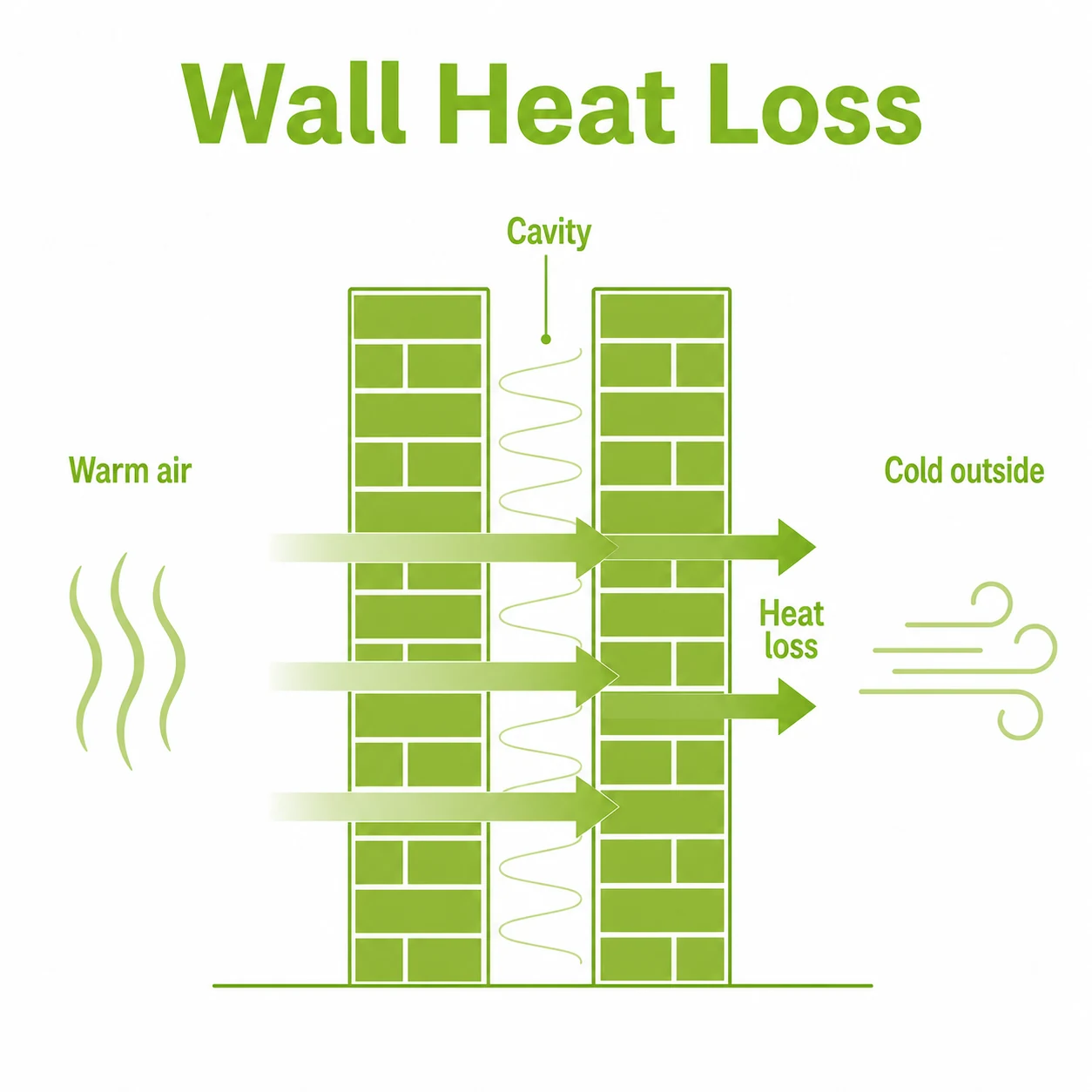
Many older homes were built with solid walls or cavity walls that were left empty. In a cavity wall, there are usually two layers of masonry with a gap between them. That gap was designed to help manage moisture and improve the wall construction, but when it is empty it can also allow warmth to move away from the living space more easily.
Heat naturally moves from warm areas to cooler areas. When the heating is on, warmth inside the home passes through plaster, masonry, cavities and external brickwork. If the wall cavity is not insulated, the process can happen more quickly, especially in cold or windy weather.
Walls are not the only route for heat loss. Roof spaces, poorly sealed loft hatches, suspended floors, ageing windows, gaps around pipework and draughty doors can all contribute. For a wider look at the main areas where homes lose warmth, JNR Contracts has a useful guide to where heat escapes in a home.
The important point is that insulation works best as part of a balanced view of the whole property. If the walls are suitable, cavity wall insulation can be a sensible improvement, but it should be considered alongside ventilation, damp checks, roof condition and general building maintenance.
How cavity wall insulation works
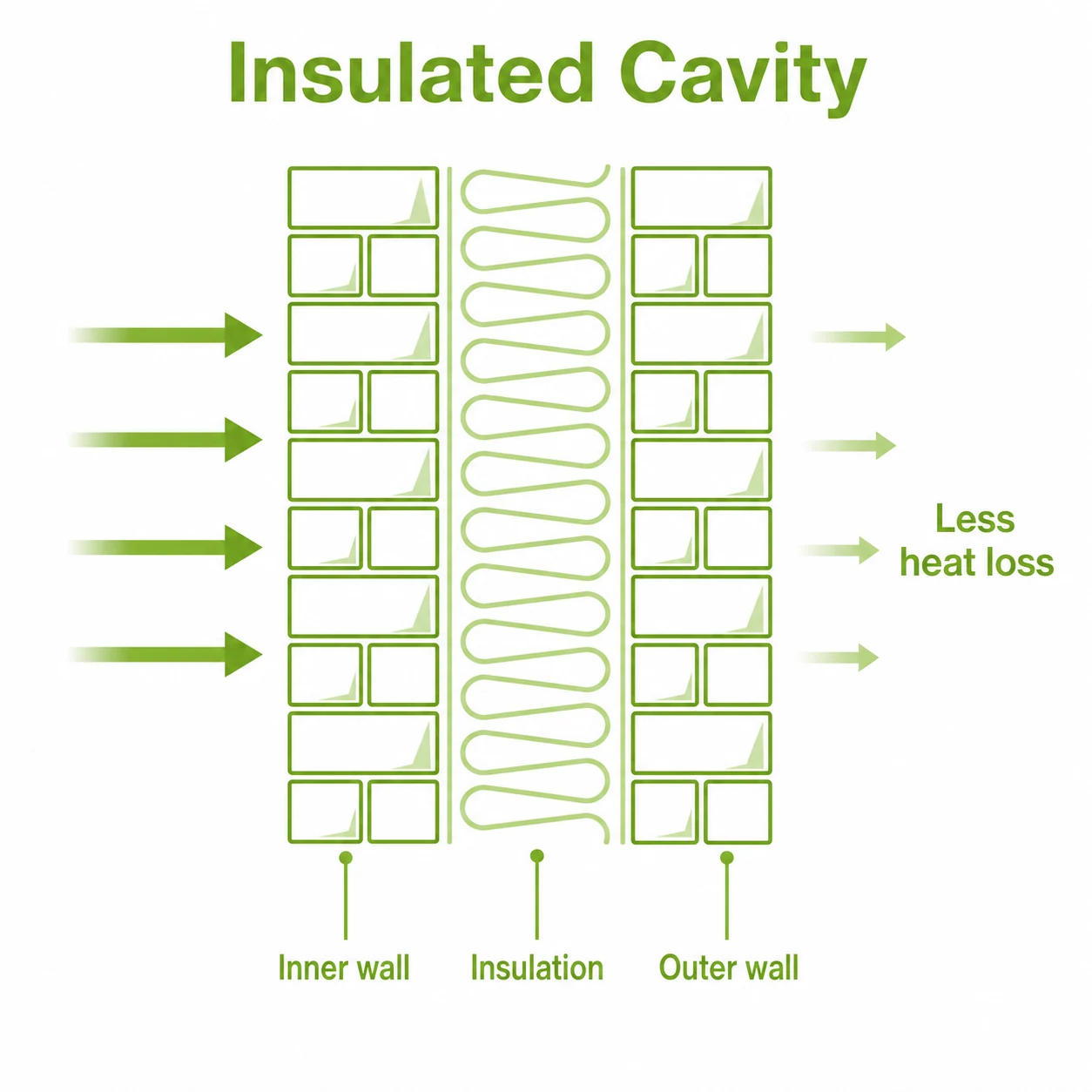
Cavity wall insulation reduces heat loss by adding insulating material into the gap between the inner and outer parts of the wall. Instead of warm air and heat energy moving freely through an empty cavity, the insulation slows that movement down.
The result is a more stable internal temperature. Rooms can feel more comfortable because heat is retained for longer after the heating comes on. This does not mean a house becomes sealed or unable to breathe. A good assessment looks at the condition of the walls, the type of cavity and the ventilation needs of the property before any recommendation is made.
Different insulation materials may be used depending on the property and installation method. The right choice depends on the wall construction, exposure, cavity width and the condition of the masonry. Homeowners do not need to choose blindly. A competent contractor should explain what is suitable and why.
If you want a simple introduction before comparing options, JNR Contracts also explains what cavity wall insulation is and how it is generally used in homes.
How suitability is assessed before installation
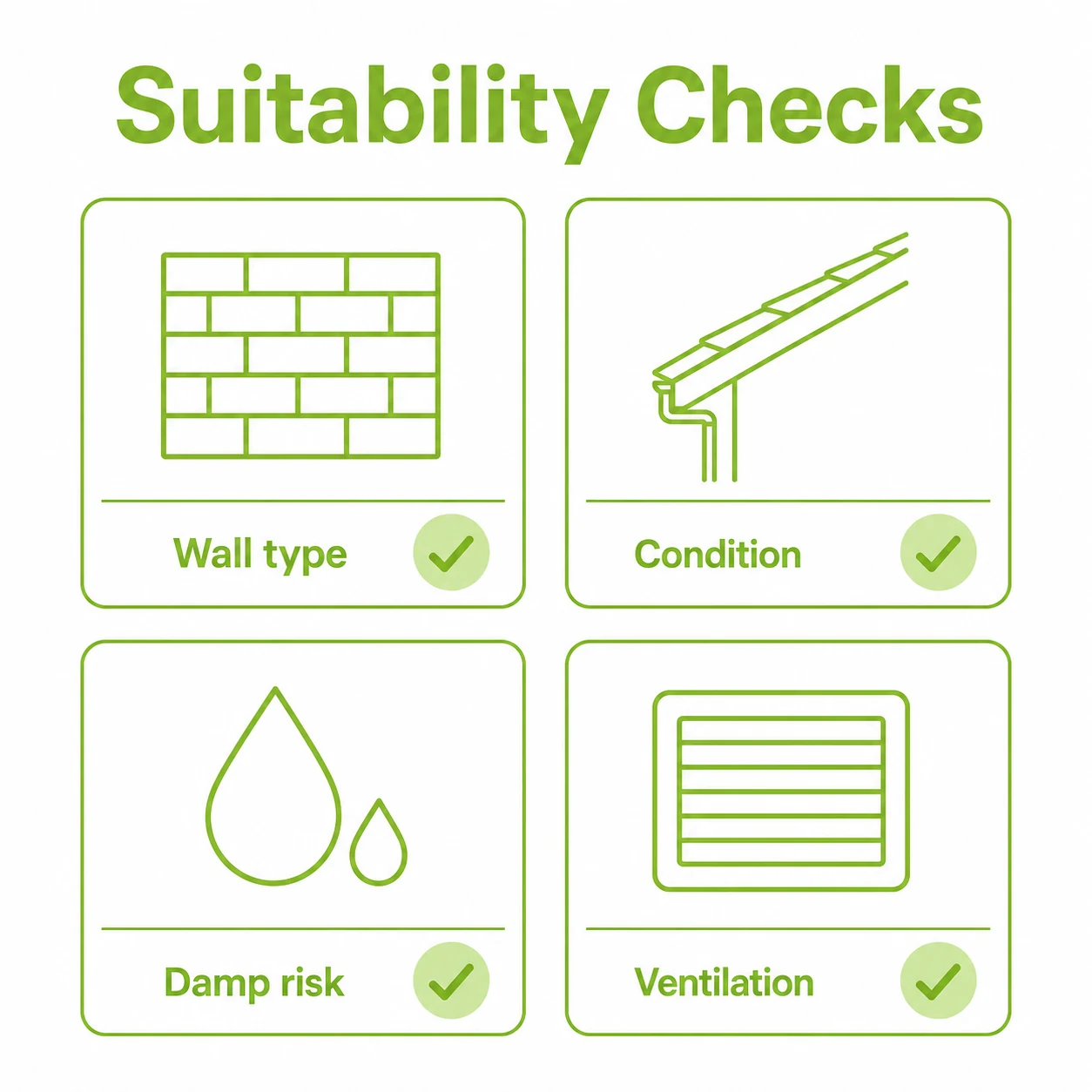
A proper survey is one of the most important parts of the process. Cavity wall insulation should only be installed where the property is suitable. The aim is not just to fill a wall, but to improve comfort without creating avoidable issues.
An assessment usually looks at the wall type, cavity condition, brickwork, pointing, existing damp signs, ventilation, access and any previous insulation. The survey may include inspection holes so the cavity can be checked before work begins. This helps confirm whether the cavity is clear, whether there is debris inside and whether the wall has already been insulated.
The outside condition matters too. Cracked render, damaged brickwork, missing pointing, defective seals around openings or leaking gutters should be addressed before insulation is considered. Water getting into a wall is a building maintenance issue first. Insulation should not be used to hide or bypass that.
Brick joints deserve particular attention because open or weathered pointing can allow water to penetrate. If the masonry needs attention, it may be worth reading JNR Contracts’ guide to brick repointing and what homeowners should know.
Ventilation is another key point. Older homes can already have a mix of air bricks, chimneys, extractor fans and natural air movement. Improving insulation may change how the home holds heat and moisture, so ventilation should be understood as part of the same conversation.
What happens during the installation
Once a home is confirmed as suitable, installation is usually carried out from the outside. Small holes are drilled into the external wall at planned intervals. The insulation material is then injected into the cavity so it spreads through the available space. The holes are filled afterwards to match the wall as neatly as possible.
The pattern of drilling and filling is not random. It is designed to help the insulation reach the right areas of the cavity and avoid leaving gaps. Around windows, doors, corners and changes in wall construction, the installer needs to work carefully so coverage is consistent.
Access also needs to be considered. Some homes have extensions, narrow side paths, conservatories or garden buildings that affect how the walls can be reached. A good contractor will explain any access requirements clearly before the work starts.
Homeowners can usually stay in the property during the work. There may be normal trade activity outside, but the process is designed to be practical and contained. After installation, the contractor should explain any aftercare points and answer questions about ventilation, condensation, heating use and what to monitor.
What homeowners notice afterwards

The most common improvement homeowners notice is a steadier feel indoors. Rooms may warm up more evenly and hold heat for longer. External walls can feel less cold, especially in spaces that previously cooled down quickly after the heating switched off.
Some households also find that heating use becomes easier to manage because the home is not losing warmth as quickly through suitable insulated walls. Exact savings vary from property to property, so it is better to avoid fixed promises. Wall size, roof insulation, heating system, window condition, draughts and everyday heating habits all affect the result.
For more detail on the financial side without relying on guesswork, JNR Contracts has a dedicated guide on how cavity wall insulation can affect energy savings.
Comfort is not only about heat. Moisture management matters too. When a home is warmer, surfaces may be less prone to becoming cold enough for condensation, but ventilation still matters. Kitchens, bathrooms, drying clothes indoors and crowded rooms can all add moisture to the air. Insulation helps with temperature control, while good ventilation helps moisture leave the home.
If mould or condensation is already present, it is worth getting the cause checked before assuming insulation alone will solve it. The best results come from understanding the building as a whole.
Common signs your home may benefit
Cavity wall insulation may be worth investigating if rooms feel cold soon after the heating goes off, external walls feel noticeably cool to the touch, some rooms are harder to heat than others, or energy use feels high compared with the comfort you are getting.
It may also be relevant if you are already planning wider home improvements. Roof repairs, gutter work, repointing, plastering and damp proofing can all reveal useful information about how a property is performing. When these areas are reviewed together, homeowners can make better decisions and avoid treating symptoms in isolation.
That said, not every home is suitable. Solid wall properties, walls with narrow or obstructed cavities, exposed masonry in poor condition or properties with unresolved damp problems may need a different approach. A careful survey will help separate good candidates from homes where other work should come first.
JNR Contracts approaches insulation as part of practical property care, not as a one size fits all upgrade. The right recommendation should be based on the wall, the condition of the building and what the homeowner wants to improve.
- Cavity wall insulation slows heat movement through suitable external walls.
- A proper survey should check wall type, cavity condition, damp signs, masonry and ventilation.
- Repairs to brickwork, pointing, gutters or damp related issues may need attention before insulation.
- Homeowners often notice more stable room temperatures and improved comfort.
- The best results come from looking at insulation, ventilation and general building condition together.
Frequently asked questions
Is cavity wall insulation suitable for every older home?
No. Some older homes have solid walls, unsuitable cavities or building condition issues that need a different approach. A survey should confirm suitability before any work is recommended.
Can cavity wall insulation help with condensation?
It can help by keeping internal wall surfaces warmer, but condensation also depends on moisture and ventilation. Existing mould or damp should be assessed properly rather than treated as a simple insulation issue.
Will the outside of the wall be damaged?
Installation involves small drilled holes that are filled afterwards. A competent installer will plan the drilling pattern carefully and make the finish as neat as the wall condition allows.
How do I know if my walls already have insulation?
A survey can usually confirm this by checking the wall construction and inspecting the cavity. Some properties may have records, but a physical check is often the clearest route.
Talk to JNR Contracts
If you are considering cavity wall insulation, JNR Contracts can assess the condition of your home and explain the most sensible next step in plain English.