
Lead flashing is one of the small roof details that can cause big problems when it fails. It sits at junctions, edges and changes in roof level, so it is often difficult to inspect safely from the ground.
A drone roof survey can give a clear view of many flashing areas without immediate access work. The key is knowing what an aerial survey can show well, what it may only suggest, and when a roofer still needs to inspect or repair the area by hand.
What lead flashing does on a roof
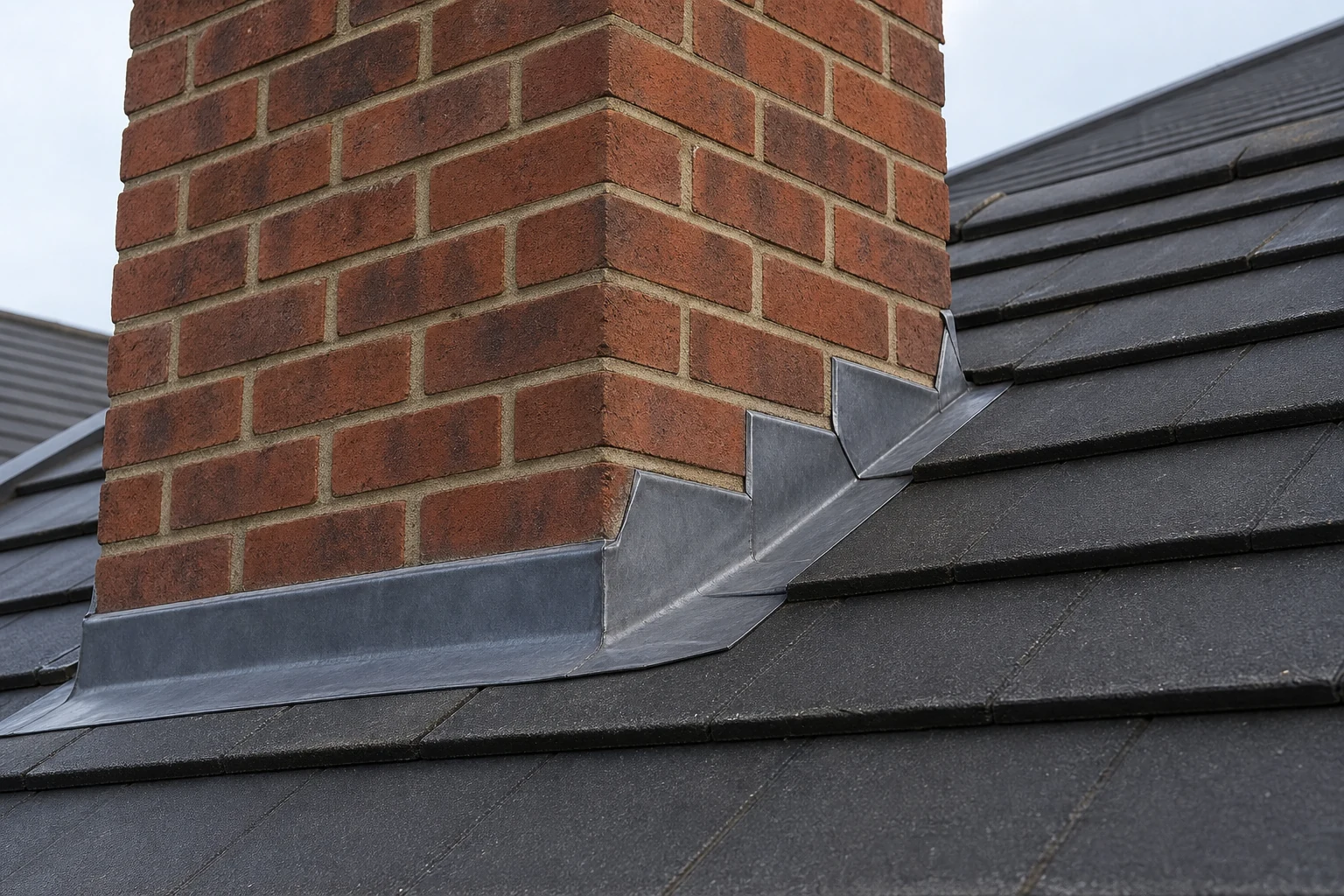
Lead flashing helps direct rainwater away from vulnerable roof junctions. You will often find it where a roof meets a wall, around chimneys, along valleys, beside dormers, around roof windows, and at some abutments and changes in level.
When flashing is fitted and dressed correctly, water should run over it and away from the property. When it is split, lifted, poorly sealed, loose, missing, or blocked by debris, water can work into areas that were never meant to be wet.
Flashing faults are not always dramatic. A small lift at an edge, a failed seal, or staining around a joint can be enough to create damp patches inside during certain wind and rain conditions. That is why the aim of an inspection is not only to look for obvious damage, but to understand how water is likely to move across the roof.
How a drone survey helps inspect flashing
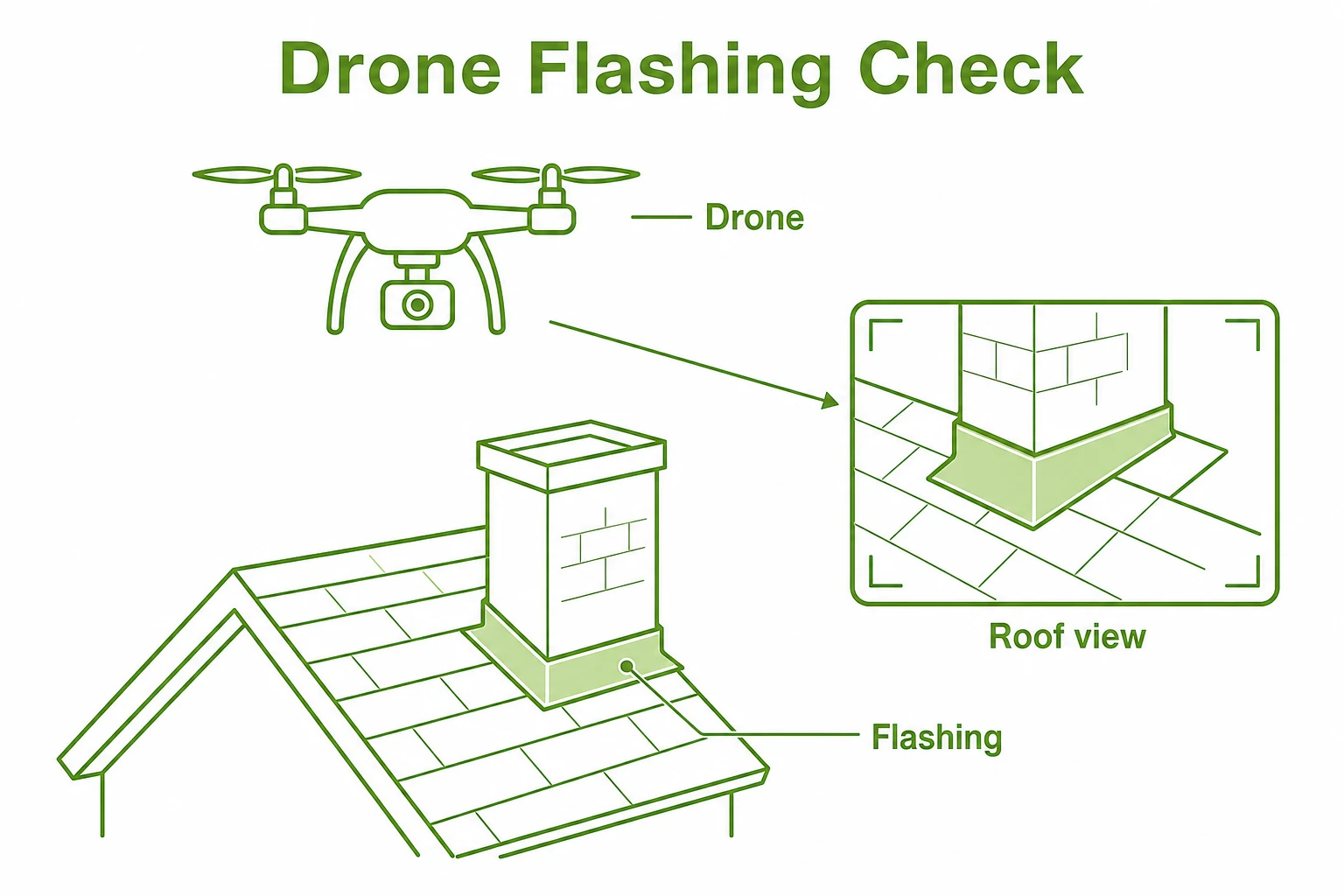
A drone roof survey gives a roofer a controlled view of parts of the roof that are difficult to see from ground level. For lead flashing, that can be especially useful because many problem areas sit above gutters, behind parapets, around chimney stacks, or along roof slopes that cannot be judged properly from below.
During an aerial roof survey, images and video can help assess the general condition of the flashing, the surrounding roof covering, nearby mortar, gutters, valleys and edges. This matters because a leak near flashing is not always caused by the flashing itself. The source may be a cracked tile, a slipped slate, blocked outlet, defective pointing, damaged underlay, or poor water flow from another part of the roof.
A drone can also make comparison easier. Instead of relying on a quick look from one angle, the roofer can review the area from several positions and consider how each detail connects to the next. That gives a better basis for deciding whether the issue looks like routine wear, storm damage, poor previous workmanship, or something that needs closer attention.
For homeowners, the practical benefit is clarity. You can often see the same evidence the roofer is discussing, which makes the advice easier to understand and reduces guesswork.
What drone footage can usually show
A good aerial inspection can reveal a surprising amount about lead flashing and the roof details around it. It can often show whether the flashing appears lifted, distorted, cracked, missing in sections, poorly dressed, or affected by debris. It can also show staining, uneven water trails and build ups around gutters and junctions.
Drone footage is also useful for spotting related defects that may be mistaken for flashing failure. Common examples include:
- Slipped, cracked or missing roof tiles near a junction
- Open gaps around chimney or wall abutments
- Vegetation, silt or moss holding water against the roof edge
- Gutters that appear blocked, loose or overflowing
- Valleys that are carrying debris or showing signs of poor drainage
- Previous patch repairs that may need proper assessment
These details help build a more complete picture. A leak that appears inside near a wall may have travelled from higher up the roof before showing itself indoors. By reviewing the roof as a connected surface, not just one suspected point, an aerial survey can help narrow the likely cause.
If you want more background on why roofers use aerial checks in the first place, JNR Contracts also explains the practical value of drone aerial roof surveys in more detail.
Where a drone survey has limits
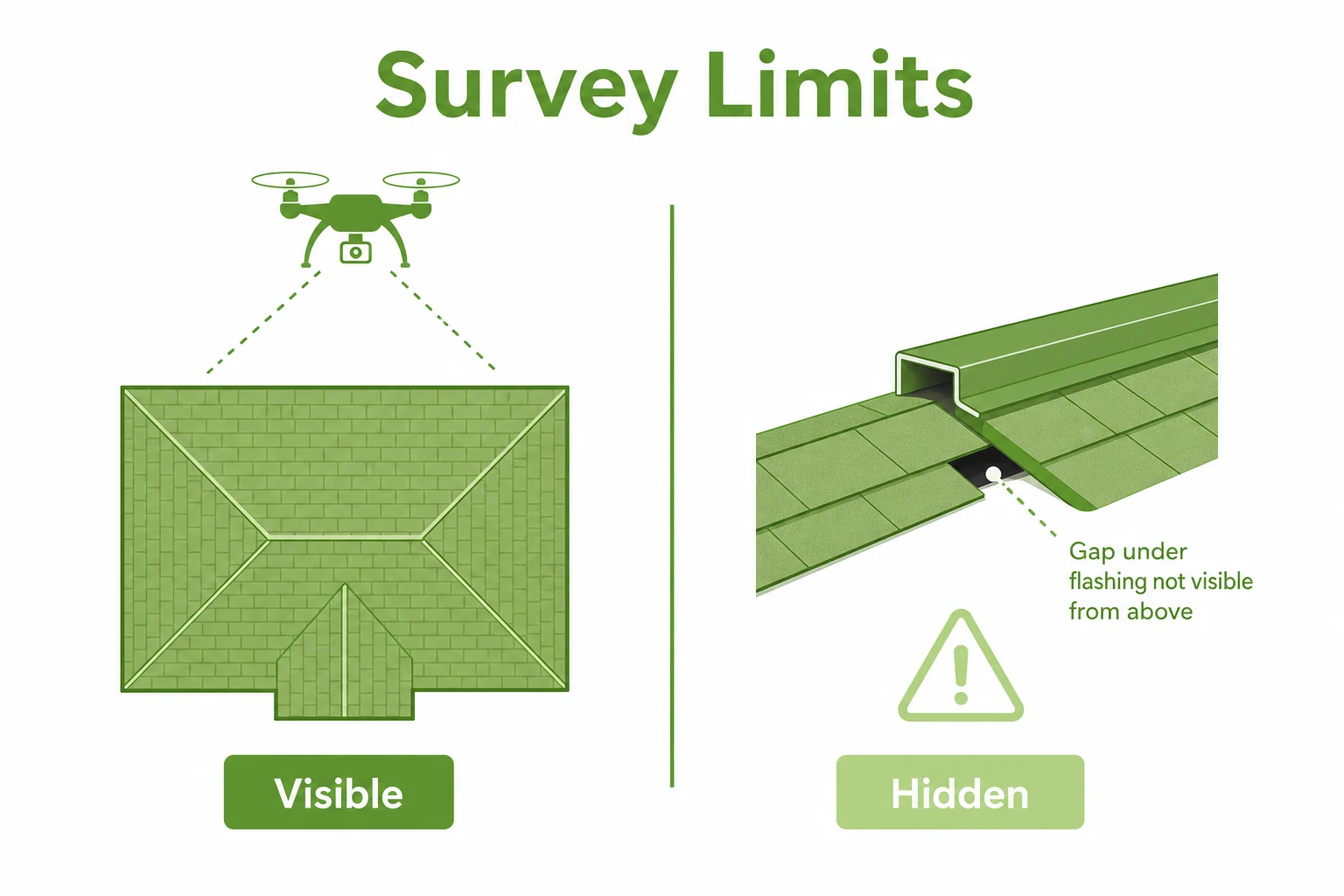
A drone survey is highly useful, but it is not magic. It cannot physically lift flashing, test fixings by touch, remove debris, check hidden laps, or inspect what is happening underneath the roof covering. It can show evidence, condition and risk, but it cannot replace every part of a hands on roofing assessment.
For example, a drone may show that flashing looks raised at an edge, but a roofer may still need closer access to confirm whether it is loose, split, incorrectly fixed, or affected by movement in the surrounding materials. The same applies where sealant, pointing or mortar is involved. A visual check can highlight failure, but touch and close inspection may be needed before repair choices are finalised.
There are also times when the visible defect is only part of the story. Water may enter at one point, travel along a hidden path, then appear elsewhere inside. In those cases, drone images can guide the investigation, but the roofer may still need to inspect roof voids, internal damp patterns, or specific details from a ladder, scaffold or safe access platform.
This is why the best use of drone technology is practical, not over promised. It helps identify and document likely issues quickly and clearly, then supports the right next step.
When a roofer should inspect more closely
A closer inspection is sensible when the survey shows a likely defect that needs physical confirmation, or where internal leaks suggest hidden damage. It may also be needed if the flashing is heavily obscured, if there has been repeated water ingress, or if previous repairs look temporary.
Responsive work is often about making the right judgement at the right time. If the issue is visible and straightforward, the survey may be enough to recommend a repair route. If the footage raises questions, a roofer can use it to plan safe access, choose suitable materials, and avoid unnecessary disruption.
This is where drone inspection and conventional roofing skill work well together. The drone helps gather information from above. The roofer interprets that information, checks what needs checking, and carries out repairs where required. JNR Contracts covers this balance further in its guide to roof inspection accuracy.
If the survey points to active water ingress, loose materials, damaged gutters or a vulnerable roof junction, the next step may be planned repair or maintenance. For urgent or developing issues, responsive repairs and maintenance can help prevent a small defect becoming a larger roofing problem.
What to expect from a useful flashing report
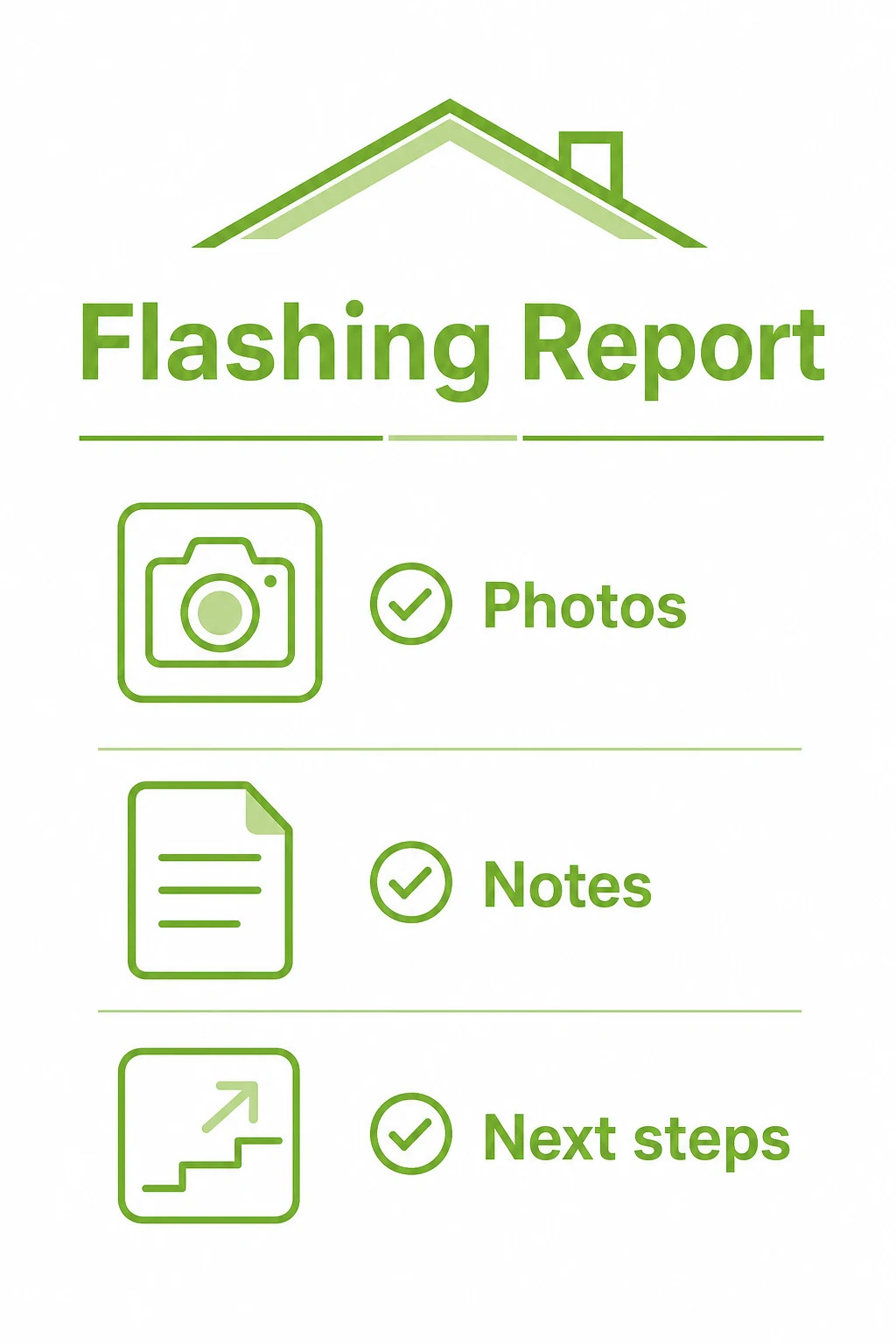
A useful survey should do more than provide attractive footage. It should help the property owner understand what has been seen, why it matters, and what should happen next.
For lead flashing, a clear report may include the location of the concern, the visible condition of the flashing, nearby roof defects, gutter condition, any signs of water tracking, and whether closer access is recommended. It should avoid pretending to know what cannot be confirmed from the images alone.
Good advice will usually separate findings into sensible categories. Some items may be routine maintenance, such as clearing debris from a gutter edge. Others may be repair items, such as lifted flashing or damaged surrounding roof materials. Some may need further inspection before anyone can give a firm repair specification.
This distinction is important because it keeps the survey useful and honest. A drone roof survey should give you better information, not false certainty. When it is carried out by people who understand roofing as well as aerial inspection, it becomes a strong starting point for clear decisions.
- A drone roof survey can inspect many lead flashing areas clearly, especially around junctions, chimneys, gutters and roof edges.
- Drone footage can show visible defects, related roof damage and water flow clues, but it cannot test hidden fixings or lift materials.
- A close roofer inspection may still be needed when the footage suggests loose, split or concealed flashing problems.
- The most useful survey combines aerial evidence with practical roofing judgement and a clear next step.
Frequently asked questions
Can a drone see if lead flashing is leaking?
It can often show visible signs linked to leaks, such as lifted flashing, gaps, staining, blocked gutters or damaged nearby tiles. It cannot always prove the exact hidden water path, so internal signs and close inspection may still be needed.
Is a drone survey enough before repairing flashing?
Sometimes, yes, especially where the defect is clear and easy to identify. If the issue involves hidden laps, fixings, sealant, mortar or internal damp, a roofer may need closer access before confirming the repair.
Can drone footage inspect gutters near flashing?
Yes. Drone footage can be useful for checking gutter edges, outlets, debris build up and water flow near roof junctions. That can help identify whether the flashing is the issue or whether water is being pushed towards it by another defect.
Why use a drone instead of just a ladder?
A drone can provide a wider view of the roof before access is planned. Ladders and other access methods still have their place, but aerial footage can help identify the right areas to inspect and repair.
Arrange a practical roof survey
If you are concerned about lead flashing, gutters or a roof junction, JNR Contracts can assess the visible condition and advise on the most sensible next step.