
A slipped roof tile can look minor from the ground, especially if the rest of the roof appears sound. The problem is that a single loose slate or concrete tile can create a direct path for rain, wind driven spray and debris.
Water damage indoors does not always start with a dramatic leak. It often begins with small amounts of moisture reaching the underlay, battens, flashing or roof space, then spreading quietly until staining, damp patches or plaster damage appear.
How a slipped tile lets water in
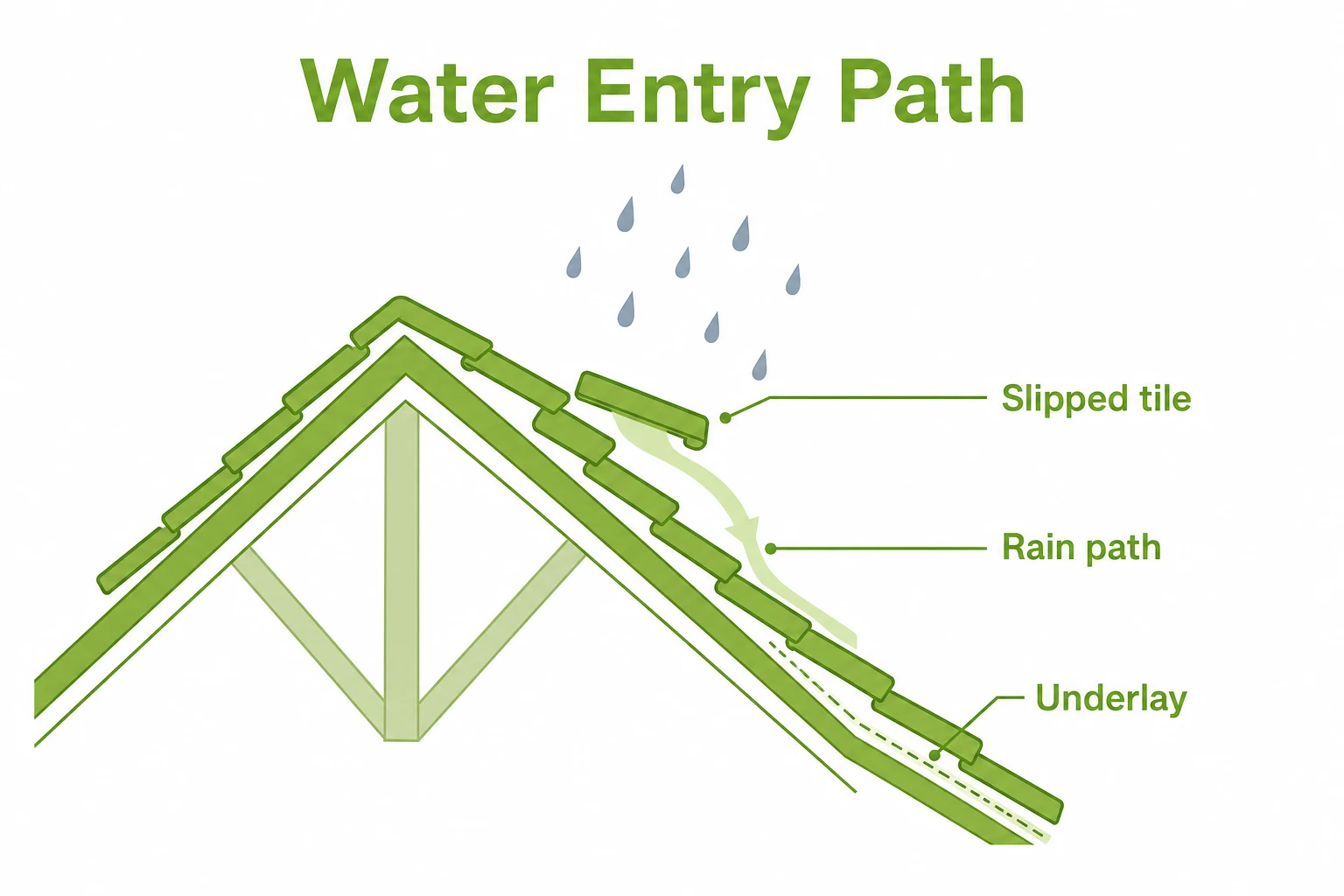
Slate and concrete tile roofs are designed as overlapping systems. Each tile helps shed rain onto the tile below, while the underlay provides a second line of protection beneath. When a tile slips, cracks or lifts out of position, that overlap is broken.
Once the gap opens, rain can reach parts of the roof that are not meant to take regular exposure. The underlay may cope for a while, but it is not a finished outer roof covering. If it is aged, torn, badly lapped or already strained around a fixing, moisture can pass through into the roof space.
Loose tiles can also affect the roof around them. Wind can lift neighbouring tiles, debris can gather in the opening, and water can run sideways under the covering instead of down the intended route. That is why one slipped tile can sometimes reveal a wider repair need once the area is inspected properly.
What water can damage before you see a leak
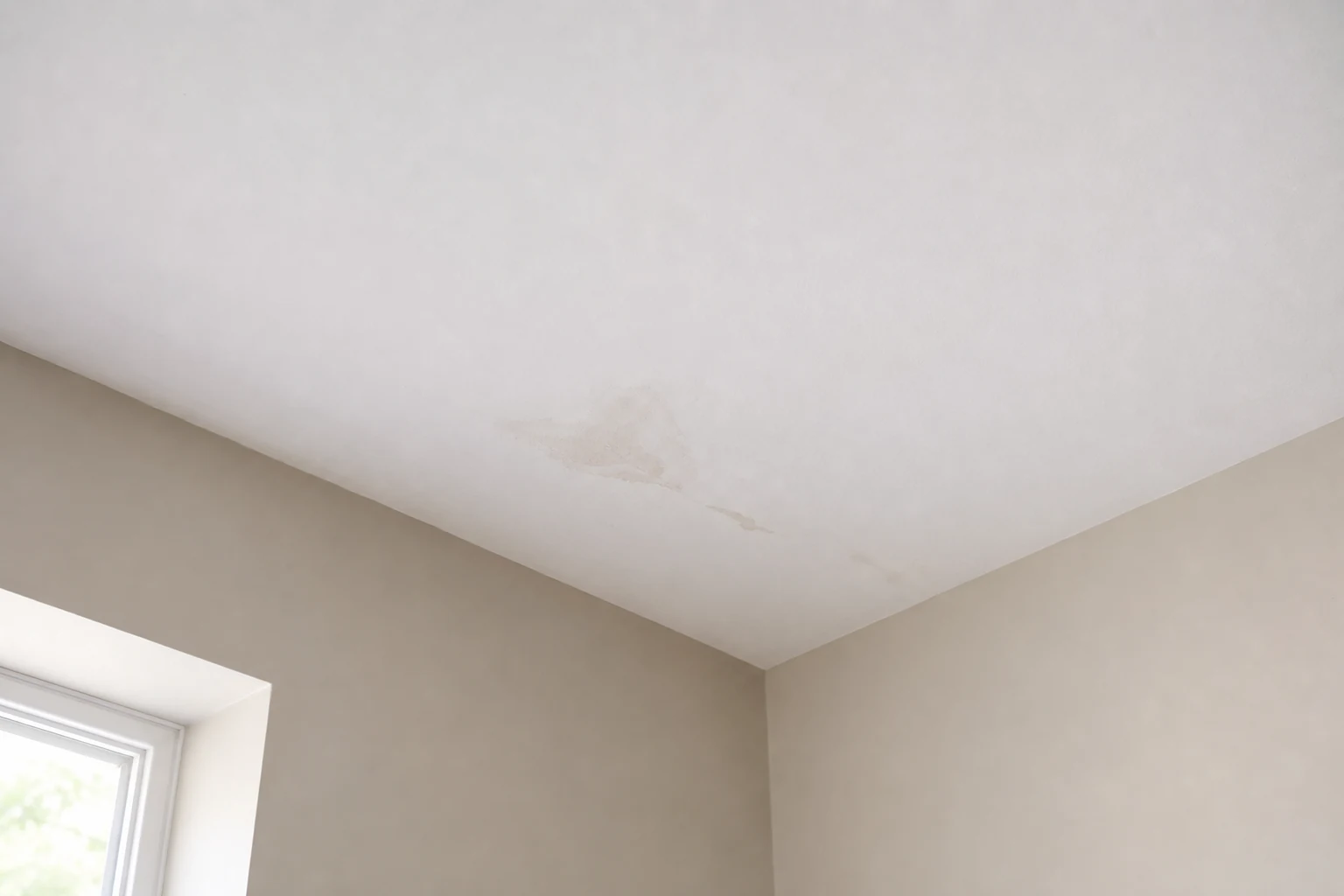
The first sign of trouble indoors is often a stain on a ceiling, damp near a chimney breast, peeling paint or a musty smell in a roof room. By that stage, water may already have travelled through several layers.
Common areas affected by a slipped tile include:
- Underlay, which can tear, sag or lose its ability to shed water away from the roof space.
- Timber battens, which support the tiles and can suffer if they remain damp.
- Rafters and insulation, where trapped moisture can reduce performance and create damp conditions.
- Lead flashing, especially around chimneys, roof joins and abutments, where movement can open small gaps.
- Gutters and valleys, where dislodged pieces, moss and debris can slow drainage and push water back towards the roof covering.
Water rarely travels in a straight line. It can enter through a gap high on the roof, run along underlay or timber, then appear inside at a completely different point. This is why guessing from the indoor stain alone can be misleading.
Why roofers check more than the missing tile
A proper repair is not only about sliding a visible tile back into place. A roofer should check why it moved, what condition the surrounding roof is in, and whether any water has already reached the layers below.
Tiles can slip because of failed nails, broken nibs, storm movement, foot traffic, worn fixings or damage around a previous repair. On older roofs, one slipped slate can indicate that other fixings nearby are also weakening. On concrete tile roofs, cracks around interlocks or edges may be enough to let water track below the surface.
A roofer may need to lift nearby tiles to inspect the underlay and battens. If the underlay is damaged, simply replacing the tile may leave a hidden weakness. If battens are soft, split or poorly fixed, they may not hold a replacement securely. If lead flashing has lifted or split close to the slipped tile, water may keep entering even after the tile itself is replaced.
For practical help with issues like loose tiles, damaged roof coverings and leak tracing, JNR Contracts provides responsive roof repairs and maintenance for faults that need careful inspection and targeted repair.
When a slipped tile needs prompt attention
Not every slipped tile means water is already pouring into the building, but it should still be treated seriously. The risk increases when the exposed area faces prevailing rain, sits close to a valley, chimney, roof edge, dormer, skylight or gutter, or when several tiles have moved together.
You should arrange a roof inspection promptly if you notice any of the following:
- A tile visibly out of line, missing or sitting lower than the surrounding tiles.
- Damp staining on ceilings, walls or around loft timbers.
- Daylight visible through the roof covering from inside the roof space.
- Loose tile pieces, slate fragments or mortar in the gutter.
- Water marks that appear after heavy rain or strong wind.
- Moss, leaves or debris building up around gutters, valleys or roof joints.
It is sensible to avoid climbing onto the roof yourself. Even a small repair can involve fragile tiles, hidden weak points and awkward access. A qualified roofer can assess the area safely and decide whether the fix is straightforward or whether nearby materials need attention too.
How aerial surveys can help with hard to see roof areas
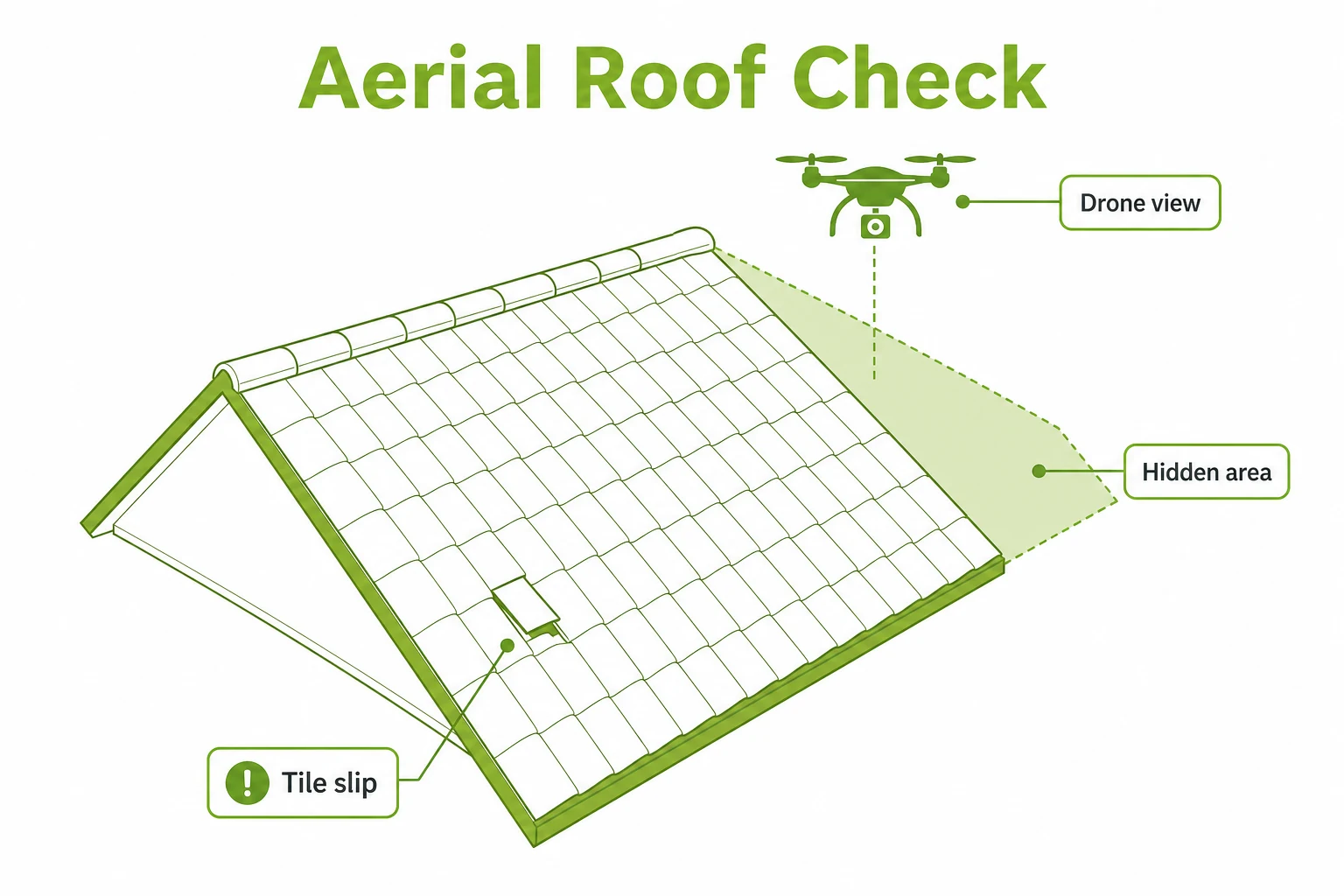
Some slipped tiles are easy to spot from ground level, but many are not. Roof slopes, rear elevations, extensions, valleys and high ridges can hide defects until water has already started to travel inside.
An aerial inspection can be useful when safe access is difficult or when the building owner needs a clearer view before arranging repair work. It can help identify slipped tiles, cracked coverings, blocked gutters, raised flashing and other visible roof defects without unnecessary disturbance to the roof surface.
JNR Contracts can use aerial roof surveys where they are appropriate for the property and the repair question. The aim is not to replace hands on roofing knowledge, but to give a clearer picture of the roof condition so the right area can be inspected and repaired.
What a good repair should achieve
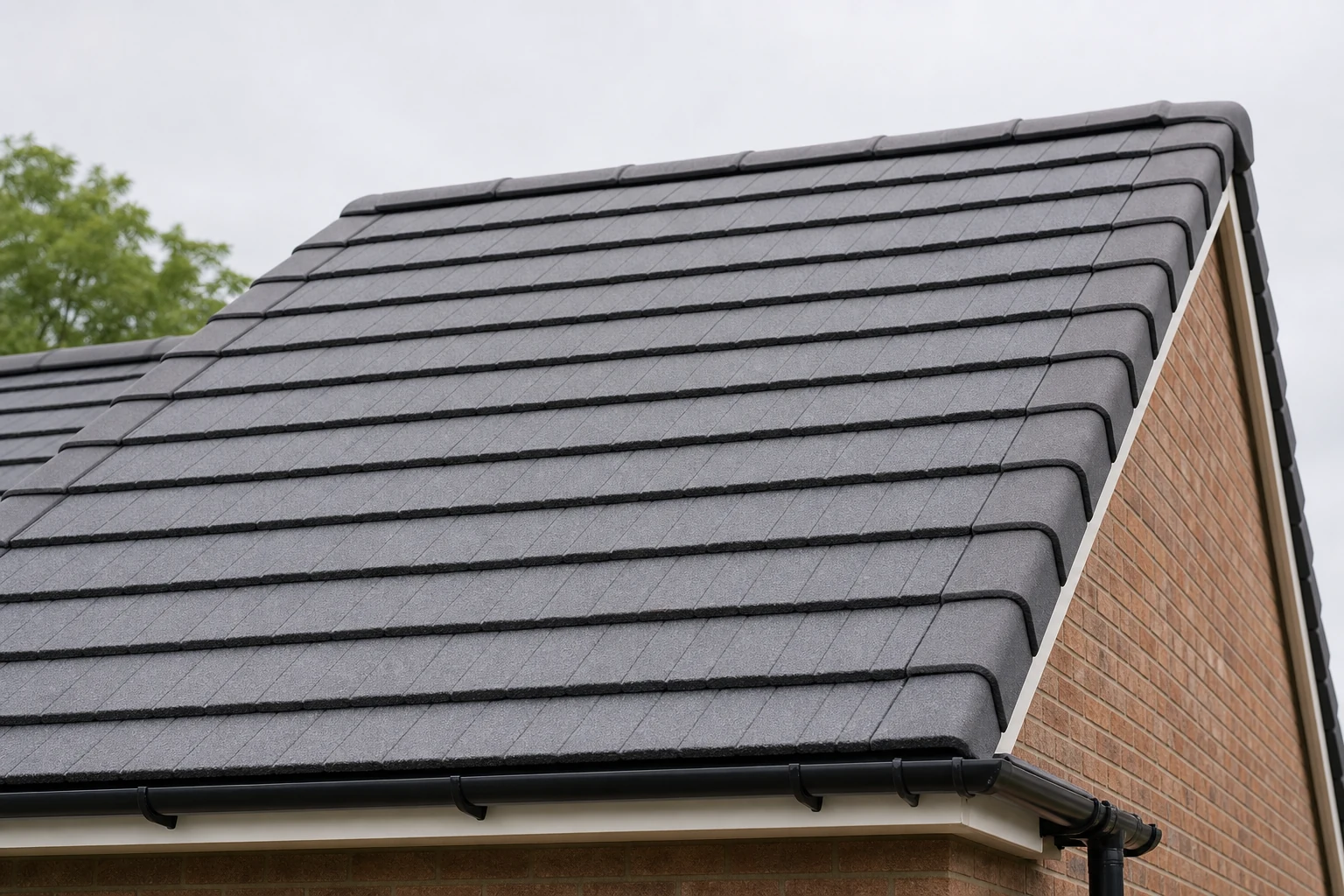
A useful roof repair should do more than make the roof look tidy again. It should restore the weather protection of the roof covering and deal with the cause of the tile movement where possible.
Depending on the roof, the repair may involve refixing or replacing slipped tiles, renewing damaged underlay locally, replacing affected battens, securing surrounding tiles, clearing debris from gutters or valleys, and checking nearby flashing. If water has reached the roof space, the roofer may also advise checking insulation, plaster and internal finishes so damp materials can dry properly.
The best approach is usually targeted and practical. A roofer should explain what has moved, what has been checked, and what repair is needed to stop water reaching vulnerable areas. That gives the property owner a clear understanding of the issue without turning a small defect into guesswork.
If the roof has several recurring tile problems, it may also be worth looking at wider maintenance. Repeated slipping can point to ageing fixings, poor ventilation, movement in the roof structure or previous repairs that have not addressed the underlying cause.
- A slipped slate or concrete tile can expose the underlay and allow rain to reach parts of the roof that are not designed for regular wetting.
- Indoor water damage may appear some distance from the actual roof defect because moisture can travel along timber, underlay and insulation.
- A roofer should check the surrounding tiles, battens, flashing and gutters rather than only replacing the visible missing tile.
- Prompt inspection is sensible if you see staining, loose fragments, blocked gutters or tiles sitting out of line.
- Aerial surveys can help identify defects in hard to see areas before repair work is planned.
Frequently asked questions
Can one slipped roof tile really cause a leak?
Yes. One slipped tile can break the overlap that normally sheds rain down the roof. If water reaches damaged underlay, exposed battens or a vulnerable roof joint, it can find a route into the roof space and eventually show indoors.
Is it safe to leave a slipped tile until the next heavy rain has passed?
It is better to arrange an inspection as soon as practical. Heavy rain and wind can drive water through the exposed gap, and the surrounding tiles may move further if the original cause is not dealt with.
Will replacing the tile always solve the problem?
Sometimes, but not always. The roofer should check the reason the tile slipped and look at the nearby underlay, battens, flashing and drainage. If any of those are damaged, they may also need repair.
How do I know if a ceiling stain is from a slipped tile?
You cannot always tell from inside because water can travel before it appears. A roof inspection is the most reliable way to trace the likely entry point and confirm whether a slipped tile, flashing issue, gutter problem or another defect is responsible.
Need a roof checked?
If you have spotted a slipped tile, damp mark or possible leak, JNR Contracts can inspect the affected area and recommend a practical repair before the problem spreads.